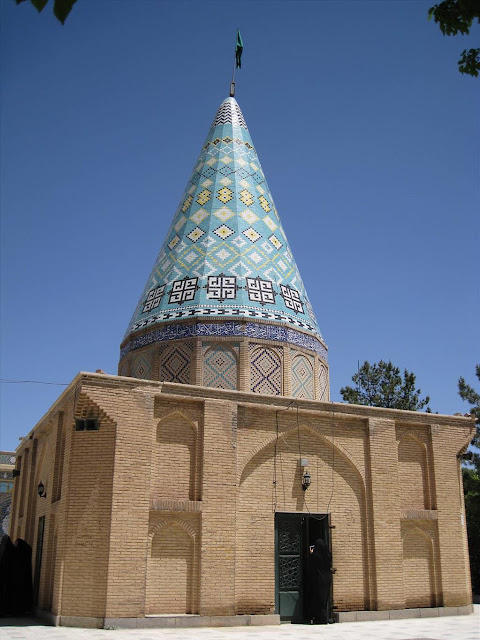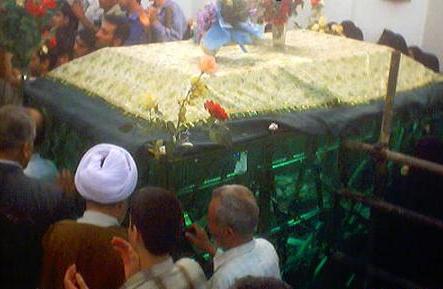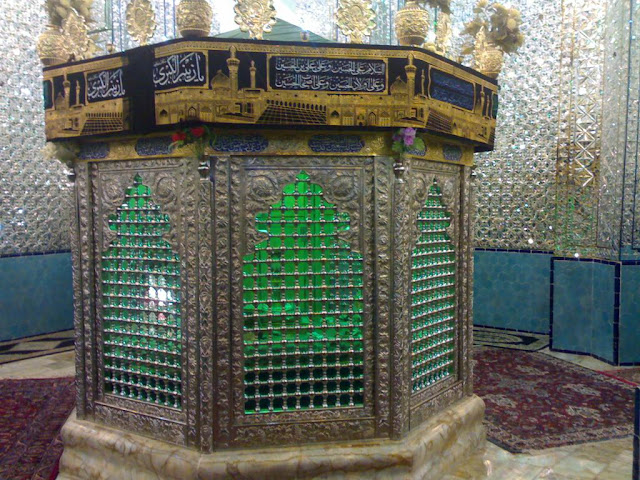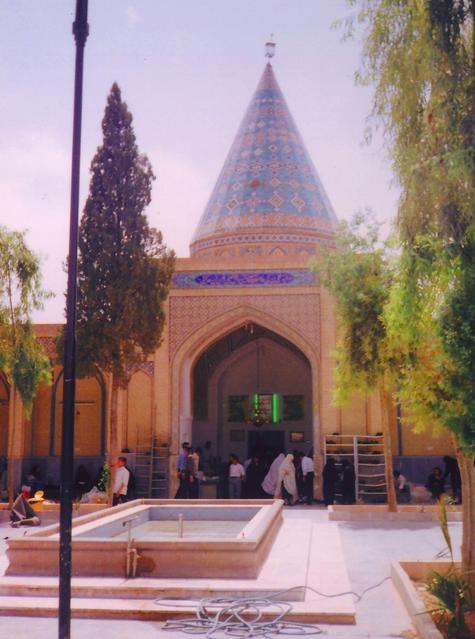
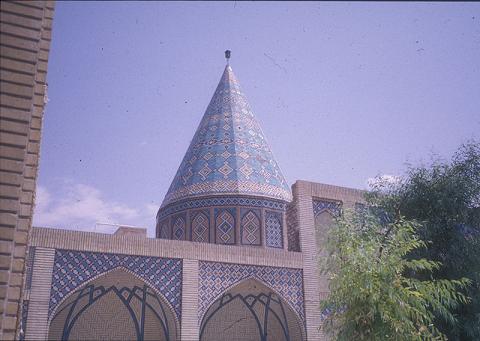
Pirooz Nahavandi is regarded by many Iranians as a National Hero. Pirooz Nahavandi's tomb is located on the road from Kashan to Fin, constructed in an eleventh century distinctive Persian-Khwarezmi dynastic architectural style, consisted of a courtyard, porch and conical dome decorated with turquoise colored tiles, and painted ceilings. The original date of its construction is unknown, but in second half of fourteen century it was fully restored and a new tombstone was placed over his grave.
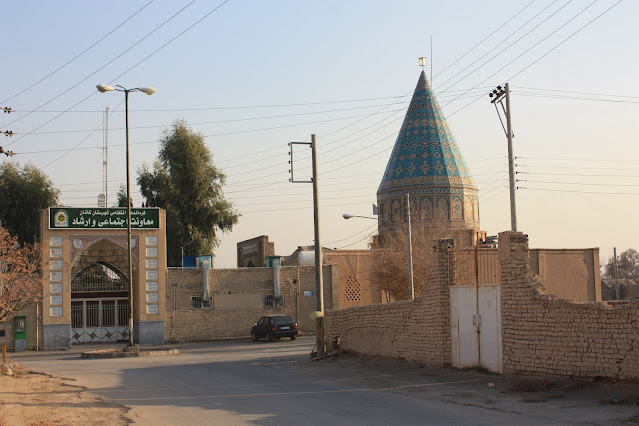
Controversy was caused recently when the International Union for Muslim Scholars called for the tomb to be destroyed, a request which was not well received by Iranians, even among those who still support the Islamic Republic, having being perceived as a specifically anti-Iranian act. In 2007 the tomb was being locked to visitors, as it was announced there is a plan for the shrine to be destroyed by the order of the Islamic Regime. However, a large crowd of Iranians gathered outside the governor's office to voice their objection regarding the closure and possible destruction of the Iranian heritage, and a shrine which was one of the symbols of Iranian resistance against the Arab invaders in 7th century CE.
Controversy was caused recently when the International Union for Muslim Scholars called for the tomb to be destroyed, a request which was not well received by Iranians, even among those who still support the Islamic Republic, having being perceived as a specifically anti-Iranian act. In 2007 the tomb was being locked to visitors, as it was announced there is a plan for the shrine to be destroyed by the order of the Islamic Regime. However, a large crowd of Iranians gathered outside the governor's office to voice their objection regarding the closure and possible destruction of the Iranian heritage, and a shrine which was one of the symbols of Iranian resistance against the Arab invaders in 7th century CE.